EUROPE IN THE MORNING

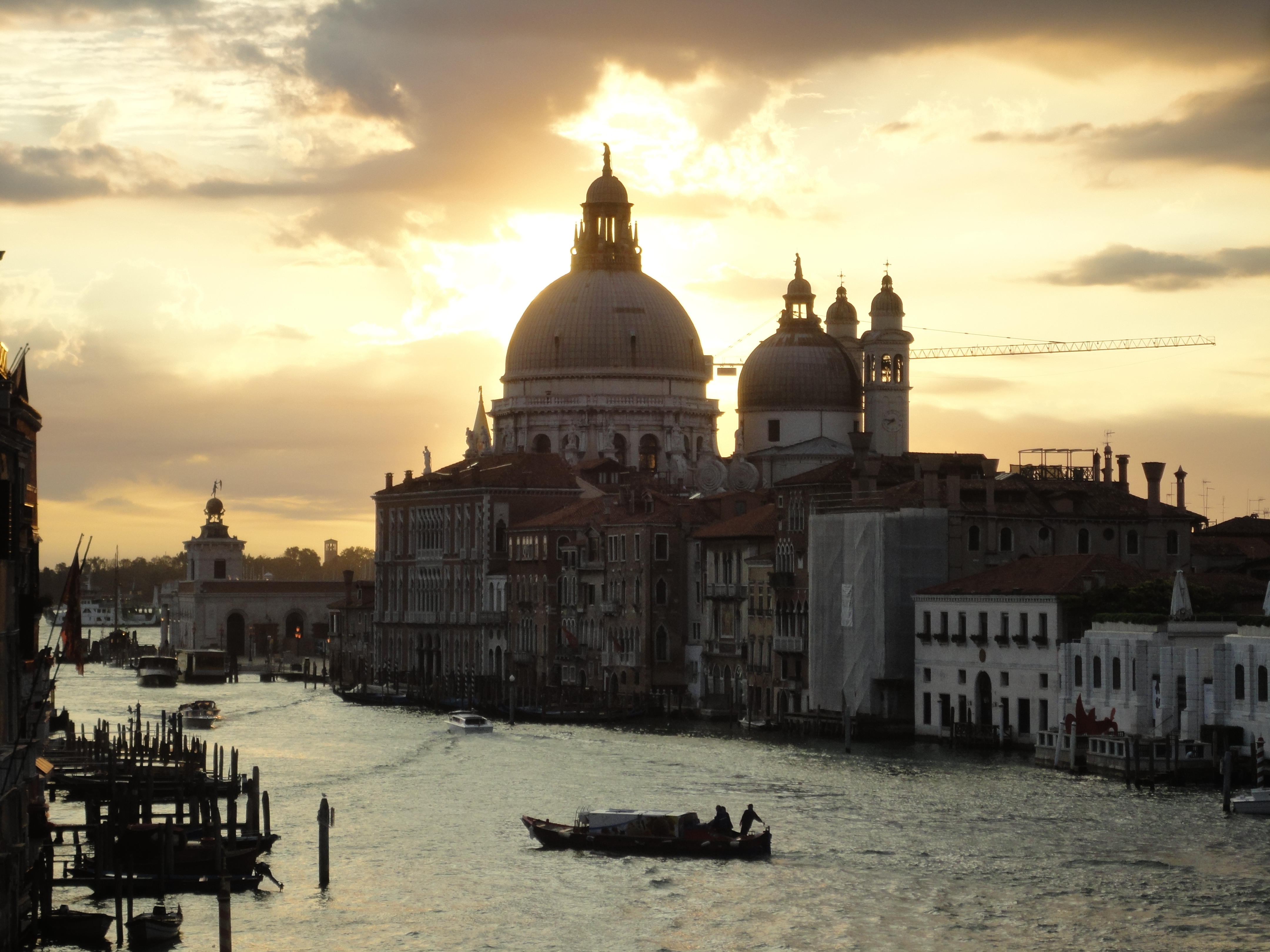
Venice by morning light

Venice by morning light

What is it about dragging yourself out from under that down comforter, pulling on some clothes, and setting forth on foot early–not five a.m. early, but six, or six-thirty or even seven–when the sun has just begun to reclaim the sky and the narrow streets still lie deep in shadow?

This is my favorite time to explore Europe, whether Amalfi, the Trastevere neighborhood of Rome, or deep in the Tuscan and Umbrian countryside.  Or perhaps Provence, the Dordogne, the beautiful villages of the Loire, or the Normandy coast.  How about an Alsatian town, or deep in the Schwarzwald.

No matter where you roam, and that’s the secret…roam… leave behind any goal…just take serendipity and your chance along as your guide.  (Don’t worry, there’ll be someone to gently point you back toward your inn should you get lost, and if you’re a beginner, stash that map where you won’t reach for it constantly.)

Atrani on the Almafi Coast, Italy

Atrani on the Almafi Coast, Italy

Greet the friendly shopkeeper washing down the sidewalk in front of the bodega.  Savor the yeasty aromas coming from that German bakery, and welcome being asked what you’re up to by that curious child fetching rolls for her family’s breakfast.  Let your obvious pleasure earn a smile in return from two early-rising nuns.  Then stand at the bar of an Italian café and open your eyes fully with a tiny drop of espresso.  This is the morning world of Europe…before bustling tour groups crowd the streets and you must fight your way across the bridges of Venice.

Panzano, Italy

Panzano, Italy

So forget that last hour or two of sleep…you’re on vacation, don’t unwisely waste these precious morning hours…and drag yourself out for that early walk.  It will remind you of why you travel, and reward you with a wealth of beauty and delight.  Museums are nice, great art a pleasure, wine tastings never a bad thing, but the true joy of discovering European life lies in the unexpected view of a centuries-old tower barely holding its own against the ravages of time, the Gregorian chanting of the monks coming from a medieval Provençal church, the old city cat emerging onto the stoop to take his first stretch of the morning.  Bring your camera.

Sarlat in the Dordogne, France

Sarlat in the Dordogne, France

In the weeks and months to come I will introduce interested readers to some magical back road driving tours and fascinating places  stumbled upon over several decades of European travel.  I’ll share with you some special little restaurants few guidebooks mention, and the inns and B&B’s which have given us special pleasure.  I’ll post some of my favorite photos taken along the way, and mention some of the brilliant novels and travel memoirs which capture a time and place.

Pitigliano, Tuscany

Pitigliano, Tuscany

But this is a joint venture, so get ready to step up.  Tell me where you’re headed, or where you dream of going.  If it’s in Western Europe, there’s a chance I can help you plan an adventure rather than just a trip, and I’ll set out some specific suggestions to make things really special.  So do tell me.

Camon, Southern France

Camon, Southern France

And don’t forget to try a morning walk.  I’m already over there in spirit, quietly dressing so as not to wake my wife, planning to join her in the breakfast room in an hour or two.  After all, let’s face it, some of us aren’t early morning people. And they can always go out later for gelato.  I’ll save some Europe to share with late-risers, as well.

San Gimignano, Tuscany, italy

San Gimignano, Tuscany, Italy

Posted in European Travel | Tagged , , , , , , , , , , , , , , | 6 Comments

Goes Round, Comes Round: Third Excerpt from Corridor of Darkness

Dieter Sprenger was ebullient.  It certainly wasn’t the weather that buoyed his spirits.  Clouds hung low overhead, he bent his head against a biting wind blowing in off the Baltic, and the acrid smell of torched buildings still etched his sinuses.

But Dieter was well pleased by his successful night.  Informed of the national action after midnight, he had taken it upon himself to rally Brownshirts and Hitler Youth to hit targets in the southern district of the city.  Now, as he strolled through the streets and took in the devastation to shop fronts and plate-glass, he congratulated himself on his personal contribution to this spontaneous outpouring of hatred on such short notice.  He anticipated praise and perhaps more when he arrived at Gestapo headquarters.

He had returned home to change his clothes, the stench of smoke deep in the fabric of suit and topcoat.  Strangely, he wasn’t regretting missing a night’s sleep.  The adrenaline had not worn thin.  His dear Anneliese had prepared a hearty breakfast, supplementing the usual fresh rolls and coffee with soft-boiled eggs, slices of Tilsit and Edam cheese, and some fresh liverwurst from Heinlen’s on the corner.

Before he left home he peeked in on the children.  Liesl had decided to keep them out of school today because of the destruction in the streets.  She didn’t want to unduly upset them.  They were both a bit young yet to understand the real danger posed by the Jews, she felt.  And there was always the chance that they might encounter some residual protests on the walk to school, or cut themselves on broken glass.  Both Little Dieter and Leni still slept peacefully.   Liesl had mentioned over breakfast that the loud cries and breaking glass during the night had disturbed their rest.  Dieter kissed each on the head.  Ah, the soft fragrance of well-scrubbed children.  He then gave his wife a quick peck and a big hug before setting out into the cold.

Dieter Sprenger knew the day’s work schedule would be full.  Hundreds of Jewish agitators and political targets had been rounded up in the early morning hours. His role in operations would now give way to hours of interrogation in the basement cells, extracting confessions and finding links to other enemies of the Reich.  It would be good, satisfying work.  Liesl had once asked if it bothered him to use extreme measures on the detainees.  He had laughed at the thought.  He told her this Dreck would destroy her and the kids given half a chance.  His work was for the cause of German purity and national pride, and she and the children should be proud of him in turn.

His spirits high, Dieter wrapped his woolen scarf a bit more tightly around his neck and pulled his hat down to keep the brim from catching in the wind.  Only a few vehicles moved through the neighborhood, even though it was past mid-morning.  He chose his usual shortcut along an industrial boulevard. The street, bordered by warehouse buildings, was nearly empty of life.  He took little notice of the few vehicles parked along his customary route.

The one most important in the life of Dieter Sprenger was a dark Horch sedan.  It rolled quietly from the curb just after he passed.  He barely noticed the movement, his thoughts on an anticipated promotion for the night’s work.  As the car gained momentum he heard the unexpected revving of the engine and turned his head in time to see the massive headlamps and grill just meters from the small of his back. His morning went dark.

Warmth flowed down his face and pooled around his head where it rested on the pavement.  He smelled the ocean, the beach on a warm, sunny day. His eyeglasses were gone and his vision blurred, but he sensed a fire hydrant pressed against his body and considered the perverse notion that he was somehow embracing it.  He heard gushing water, waves pounding on a distant shore.

The Horch shifted gears and its right tire backed over his legs.  The gears meshed once again and the sedan rolled up over his back as it sped away.  He realized then that he had no feeling in his limbs.

The day was far less glorious now.  Dieter felt his mind graying, losing itself in the overcast.  He thought of his wife, cleaning up the breakfast dishes.  He thought of his children, still tucked in their warm beds.  The taste of the fresh liverwurst lingered at the back of his mouth.  As he lay dying, there were no thoughts of the many detainees he had questioned so thoroughly in the basement rooms.  Certainly no recollection of the old pastor whose wracked body had made such a mess of his table.  He would never link that interrogation to this unfortunate end.

(This is the third and final installment from my novel, at least for now.  Watch for Europe travel ideas coming soon.  All work is copyrighted.)

Posted in Historical Thriller | Tagged , , , , , , , | 1 Comment

A Bad Day for the Pastor: Second Excerpt from Corridor of Darkness

WARNING:  VIOLENCE POSSIBLY DISTURBING TO SOME READERS

Pedestrians quickened their pace as they passed Gestapo headquarters in Königsberg.  Muffled cries or the occasional scream rising from the shielded basement windows resonated in the mind of any hapless passer-by. Mothers with small children in tow crossed the street a block before reaching the former hotel.  Why be forced to give implausible explanations to curious little ones?

Klaus Pabst found the basement interrogation facilities to his liking.  A common aisle gave access to a  row of narrow cells–revamped storage closets once used for supplies.  Small shuttered openings in the compartment doors allowed a visual check on occupants, but each of the six cubicles–when unoccupied–held nothing but a distasteful tin bucket pushed into one corner.  Small grilled openings allowed eavesdropping on conversations between detainees. A metal basket over the ceiling light fixture prevented access to the glaring bulb, or the electrical wires.

Little was left to chance.  Vents drew debilitating heat into the cells in summer, with no provision made for exhausting the oppressive air.  In contrast, the brutal Baltic winter turned the cramped basement rooms into cold storage lockers.

Across the corridor stood two larger rooms and a solitary toilet facility, exclusively for staff use.  The rooms were ideally positioned to force cell occupants to hear the sounds–if not the specifics–coming from interrogations in progress.  Painted a clinical white with pale green doors, the rooms were sparsely furnished.  Two metal chairs faced either side of a small table.  Above one chair hung a shaded ceiling lamp, and at its feet iron shackles were attached to the floor.  In the center of each room sat a long bench fitted with leg and arm restraints.   Another metal table displayed implements of interrogation in neat order:  an automobile battery with cables, an electric drill, a soldering iron, and a selection of hand tools, both sharp-edged and blunt.  Cudgels and whips with metal-tipped leather cords hung on a wall rack.  To the side of the table sat a mop bucket.  A white hospital cabinet occupied one corner, vials and hypodermic needles clearly visible through the glass door.  In the opposite corner stood a wash basin with towel rack and small metal wall mirror.

Near the ceiling a thick iron rod traversed the room, fitted with a pulley system of ropes, shackles and wires, and a meat hook. The concrete floor, painted gray, sloped slightly toward a center drain.    Additional heat when required was provided by a coal stove, also handy for bringing iron implements to a nice glow.

Unlike his close friend Horst, so ingenious in developing interrogation techniques but stoic in their use, Klaus showed obvious pleasure in their application, even when little of immediate value was learned.   As Himmler himself had said, everyone has something to hide. Even should you find you have interrogated the wrong suspect for a particular crime, be confident you have gleaned information in the process which will lead to an enemy of the Fatherland.  But this time, Klaus had what he wanted.

Strapped naked across the bench, the pastor made a sorry spectacle.  His once colorless back and buttocks were flayed raw from the metal whip, his flesh torn in ragged strips.  The early cries of pain and denial were now barely audible moans. Sprays of fresh blood streaked table and floor, and urine and excrement ran down his legs.

His prayers had gone unanswered, for the torment had not stopped; in fact, the pleas had been mocked by his interrogators.   It was only a matter of time before he confessed all he knew. Perhaps he already had.  Judging by the shallow breathing, Klaus doubted the fragile old man could take much more, and he suggested Sprenger take a break in the proceedings.  Klaus knew enough already for his purposes, even if the good pastor gave up the ghost before they were finished.

“Best light a match to clear the air,” he suggested to Sprenger as he left the room, the interrogation record in hand.  “The stench in here is barbaric.”

All work copyrighted.

Posted in Historical Thriller | Tagged , , | Leave a comment

Corridor of Darkness: First Excerpt

Klaus Pabst was pleased with his long day’s work.  It had been well worth rising early and the hours of travel from Berlin, crossing the Polish Corridor in a train whose doors were sealed to prevent anyone from boarding or detraining on Polish soil.  He had enlisted Dieter Sprenger, a Gestapo associate from the Königsberg office, to drive him out to the country village of Praddau.  Sprenger had done the local research and legwork that made this final step so simple and satisfying.

The parish church was easy to find, as was the aging pastor who greeted them in his office.  The frail man sat uneasily behind a cluttered desk, his pale skin almost translucent, stretched tightly across sharp cheekbones.  Blue veins and age spots stained his arthritic hands.  His eyes however were soft and fluid.  Despite the civilian dress the old man knew immediately that his visitors were on official business, policeman, undoubtedly Gestapo. There was a look and demeanor which all Germans recognized and feared.  He rose from his chair with difficulty.

“How may I be of service, gentlemen?”

Pabst drew his warrant badge from his vest pocket.  The oval metal disc bore embossed lettering–GEHEIME STAATSPOLIZEI–and a four-digit identification number stamped below. The mere sight of the badge intimidated most citizens into immediate cooperation with its bearer.  It had the desired effect here.

“Yes, of course, officers, what may I do for you?” the pastor said.  One gnarled hand gripped the other, both trembling in a dance of nerves.  The pastor found his chair and waited expectantly.

“You have a quiet little parish here, well out of the mainstream of church politics, we presume?”

The minister hesitated a moment, knowing that every spoken word had consequences.  The last few years had been especially trying for the Protestant church as well as the Catholics.  Untold hundreds of his fellow pastors had been arrested for refusing to adopt the precepts of “Positive Christianity,” the Party creed shifting focus from belief in Christ as Son of God to faith in National Socialism as the one true expression of God’s will.   “I’m sure you know the other diocesan pastors and I have sworn our personal oath of obedience and allegiance to the Führer.”  He willed his trembling hands to be still.

“Indeed you have, and I’m confident your parishioners are pleased you now direct your prayers to the Reich and its Führer.  That makes much more sense than paying reverence to an insignificant Jewish carpenter, don’t you agree?”  Pabst gave the old man a smug look, challenging him to respond.

The pastor stared at the officers.  “Is my loyalty in question?”

“We’re here on a different matter, a question of certain birth logs.  The local civil records aren’t all that helpful. In fact, they raise more questions than they answer.  Perhaps you can help us fill in some blanks using your family records here in the parish office?”  Pabst and Sprenger took seats before the pastor’s desk without being invited.

“Yes, forgive me, please be seated.  And of course, I’m happy to help in any way I can.”  The minister appeared anything but happy.  “Which family is of interest?”

Klaus smiled at his colleague before responding to the cleric.  “Why yours, of course.  As I just said, it’s your family that interests us.”

The pastor’s translucent skin appeared paler still, had such a thing been possible.

             All work copyrighted.

Posted in Historical Thriller | Tagged , , , , , , , , , | 4 Comments